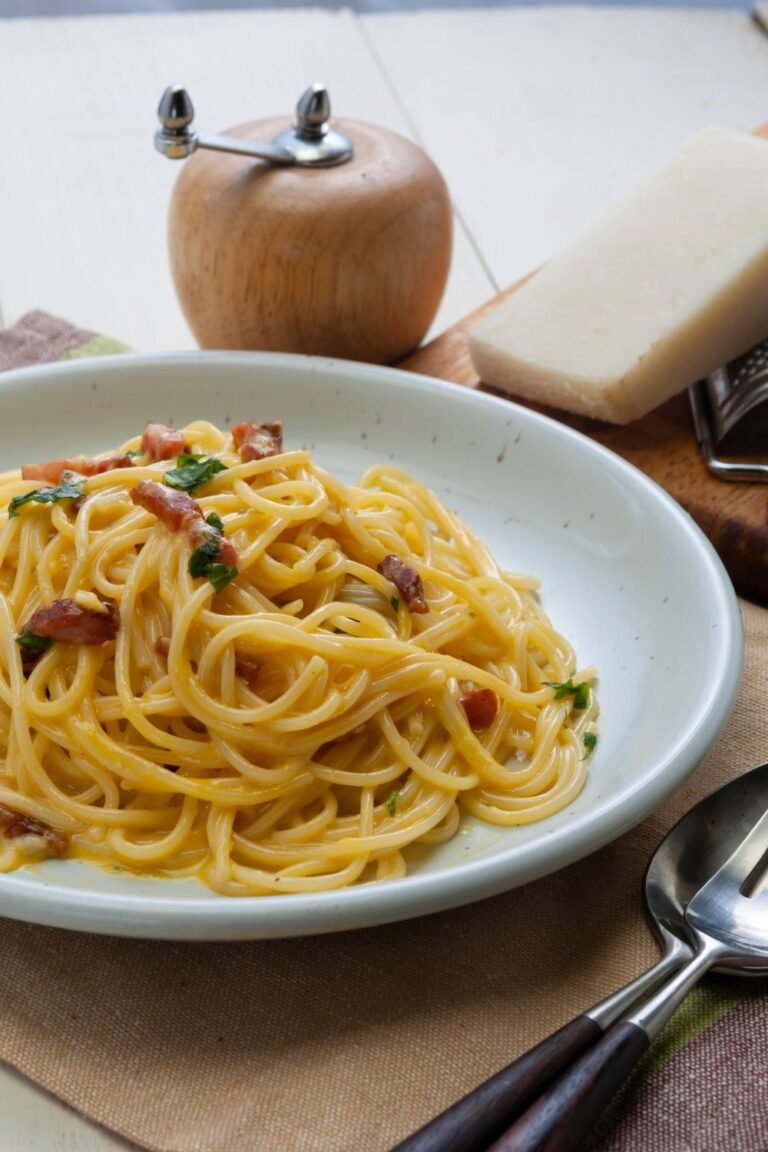
Cooking pasta well takes no special equipment, but a few habits make a big difference. This guide covers the method Italian home cooks use every day, from salting the water to finishing pasta in the sauce.
Use enough water and salt it well
Allow about 1 litre of water for every 100 g of dried pasta, and bring it to a full rolling boil before the pasta goes in. Plenty of water keeps the temperature up and stops the pasta sticking.
Add about 10 g of salt per litre once the water boils. The water should taste pleasantly seasoned. Pasta absorbs salt only while it cooks, so this is your one chance to season it from the inside.
Skip the oil, and stir early
Oil in the water does not stop pasta sticking. It floats on the surface and later makes the sauce slide off. Instead, stir the pasta during the first minute or two, which is when it is most likely to clump.
Cook to al dente, then one minute less
Al dente means to the tooth: the pasta should be cooked through but still firm when you bite it. Start tasting two minutes before the time on the packet.
If you are finishing the pasta in a sauce, drain it about a minute early. It will finish cooking in the pan and absorb flavour as it does.
Always save some pasta water
Before draining, scoop out a mug of the cooking water. It is full of starch, and a splash added to the sauce helps it emulsify, cling to the pasta and turn glossy. Dishes such as carbonara and cacio e pepe depend on it.
Finish the pasta in the sauce
In Italy, pasta is rarely served with sauce spooned on top. Instead, drained pasta goes straight into the pan with the sauce and is tossed over heat for a minute with a little pasta water.
- Never rinse cooked pasta unless making a cold salad
- Match the shape to the sauce: long strands for oil and cream sauces, tubes and shells for chunky sauces
- Serve pasta immediately in warm bowls